How Many Citizenship Can You Have?


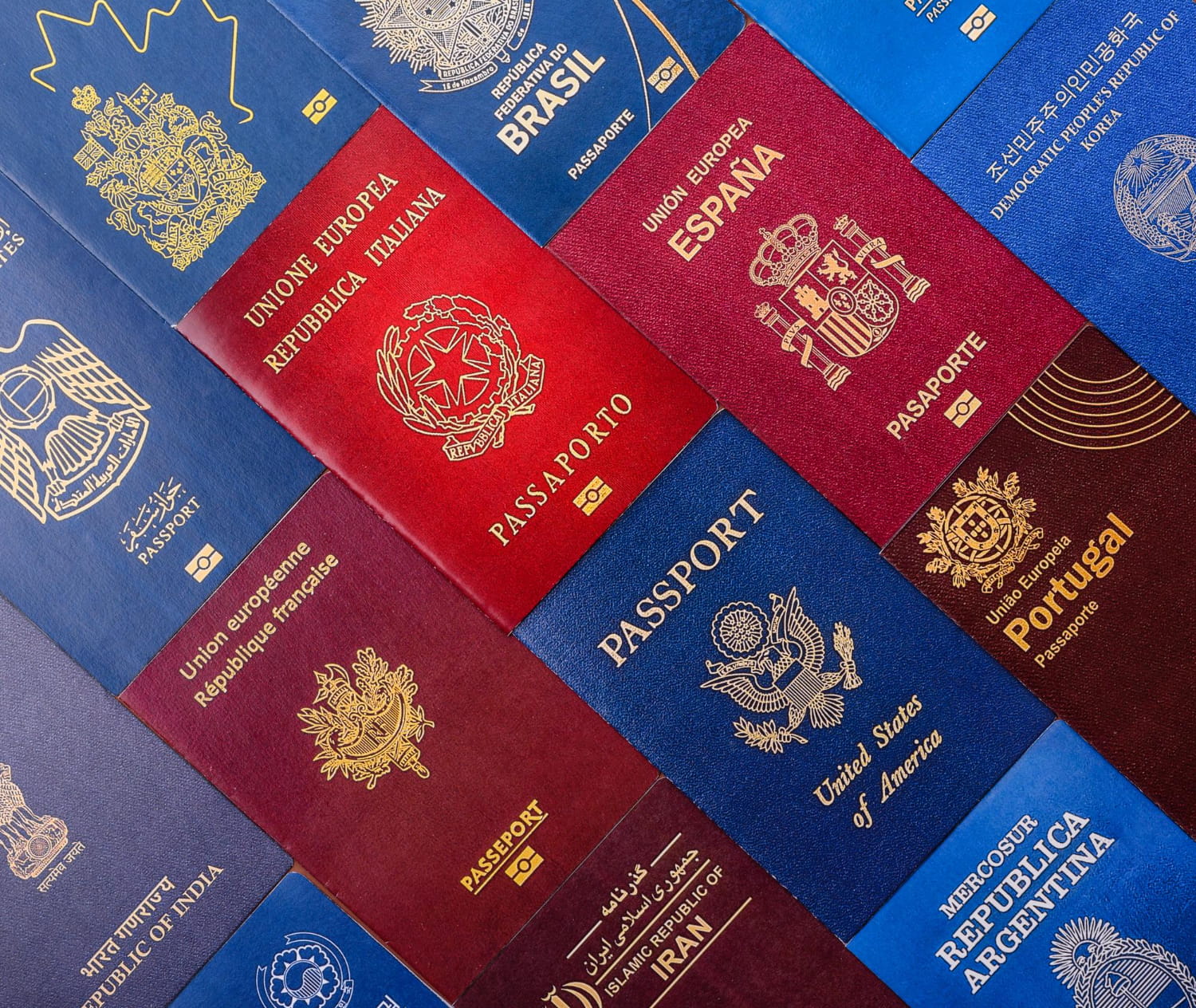
Citizenship has an unusual property among legal statuses — it layers. A new tax residency cancels the prior one, and the same logic applies to residence permits and most other legal categories tied to a single jurisdiction. Citizenship doesn't behave that way. Each country grants its own without erasing what another country granted, which is the reason holding more than one passport is possible at all.
Yet the question "how many" is the least interesting one. The harder questions are which passports can legally coexist, how the stack survives tax and succession over a generation, and at what point an additional citizenship adds friction without adding freedom. This piece walks through each.
The Number of Passports You Can Hold Is a National Question
No global treaty caps the number of citizenships a person can hold. No convention. No supranational body. The number isn't set by international law at all.
The ceiling is set country by country. Every state writes its own rules about which of its citizens may hold another nationality, under what conditions, and with what consequences. Someone who holds three passports operates inside three different legal systems, each one applying its own logic to the same individual.
This is why the answer to how many passports you can have is never a single number. It depends on which passports are already in the stack and which one is being added. Two countries that each allow dual citizenship may still produce a conflict when joined to a third. The useful question isn't "what is the maximum?" It is "which specific combinations remain legally compatible for my profile?"
Where Citizenships Coexist and Where They Compete?
One country grants citizenship under its own rules. Every other country in the stack then applies its own rules to that event, sometimes retroactively. A passport granted in country A is not automatically accepted by country B as something country B's national is permitted to hold.
The order of acquisition matters more than people expect. Stacking by descent first preserves later options, because descent claims rarely conflict with future naturalizations. Investment programs can be layered on top of either, since most do not demand renunciation. The decisions made in the first ten years of a portfolio constrain what remains possible in the next forty.
Three assembly patterns cover most real portfolios:
- The passive stack happens at birth, with parents of different nationalities producing multiple citizenships from day one.
- Active stacks come later, built mid-life through naturalization and investment.
- Hybrid stacks combine descent, marriage, and investment across two generations.
One clean stack combines Italy by descent, the United States by naturalization, and St. Kitts and Nevis by investment. None of the three require renunciation, and the stack holds up under scrutiny in each jurisdiction.
Triple Citizenship Works Only When All Three Countries Agree
Triple citizenship passes one test or fails it. Every country in the stack must tolerate the other two. The test is binary.
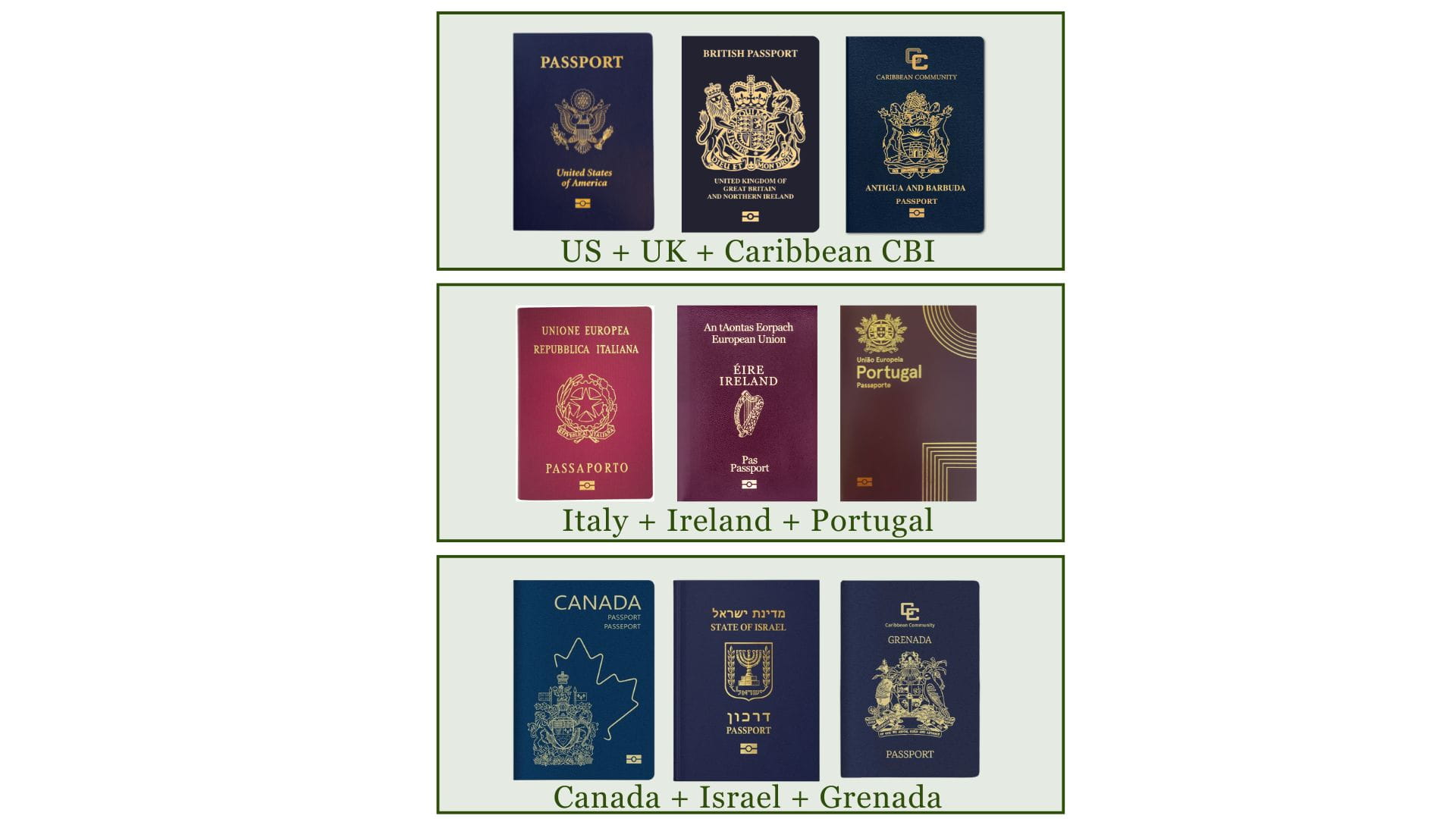
Combinations that hold up cleanly include US plus UK plus a Caribbean CBI passport, Italy plus Ireland plus Portugal after the required naturalization periods, and Canada plus Israel plus Grenada. None of these countries requires renunciation when their citizens acquire another nationality.
The asymmetry problem is more subtle. Some countries tolerate a second nationality but apply restrictions once it is exercised. Egypt and Armenia bar dual citizens from being elected to parliament. Several jurisdictions quietly limit security clearances, diplomatic protection, or candidacy for sensitive public roles, even where the citizenship itself remains valid. The passport is intact; the access it normally confers is not.
The renunciation trap is the more common failure point. India is the clearest case: its citizenship oath includes a mandatory surrender of all prior nationalities. A handful of other countries apply similar rules, detailed in the next section. Adding any of them as a third citizenship usually costs the first two.
Programs that work cleanly as a third addition are usually the same ones that rank highest for speed and accessibility.
Where Dual Citizenship Is Still Not Permitted?
Restrictive citizenship laws follow a regional pattern more than an ideological one.
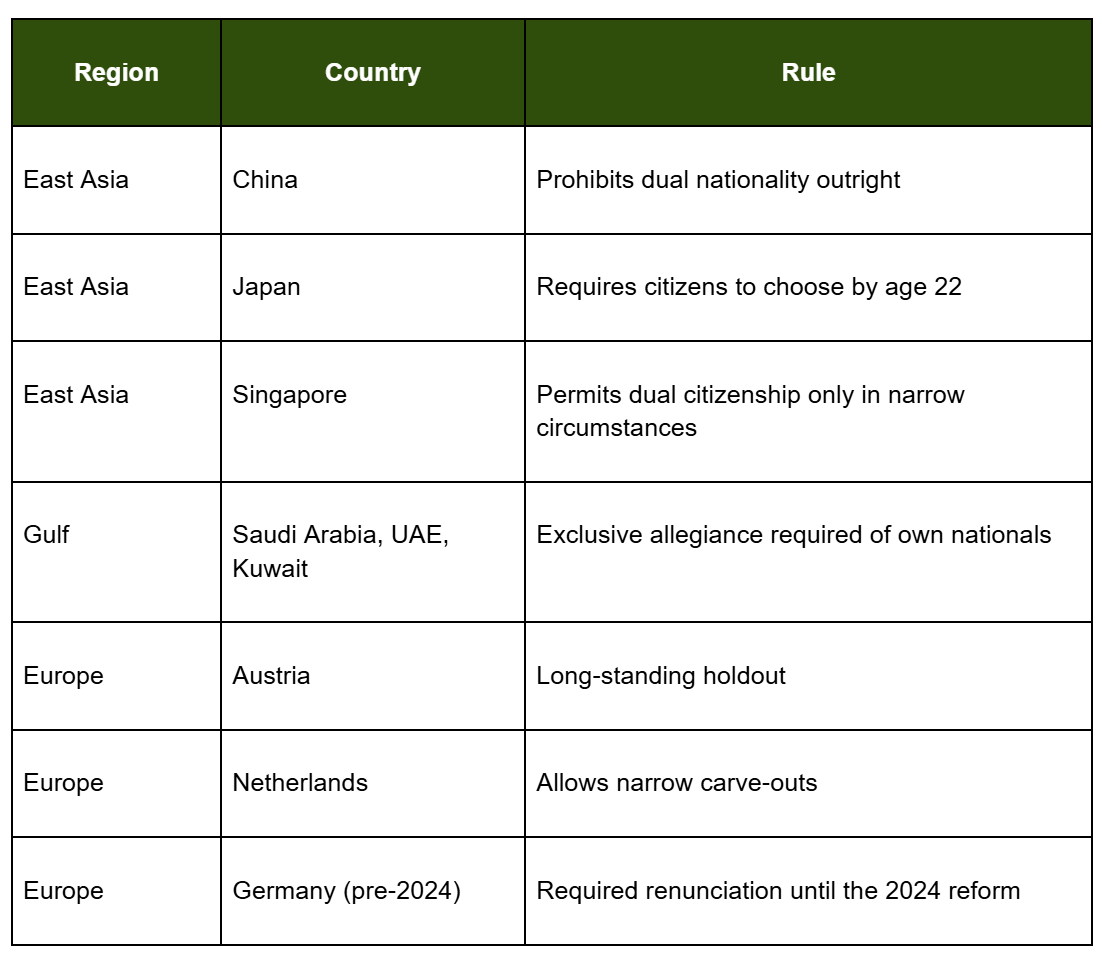
Workarounds exist where the law has been softened:
- India offers Overseas Citizen of India status, which grants long-term residency without restoring citizenship.
- Spain runs a two-year naturalization fast track for Ibero-American and a few other historically connected nationals, who keep their original passport.
- Germany opened naturalization to dual citizenship under its 2024 reform, ending decades of exception-only access.
A restrictive home nationality doesn't disqualify a person from building a portfolio. It changes the sequencing. Many investors retain the restrictive citizenship and add through routes the home country cannot easily detect or enforce against — investment programs that issue separately, descent claims registered abroad, and naturalizations that occur after physical departure.
Choosing a European program also means choosing where to live, and where these families actually settle is the parallel question.
What a Second Passport Quietly Commits You To?
Five obligations attach to holding multiple passports. None of them is obvious from the brochure.
The Master Nationality Rule
Inside one of your countries of citizenship, that country treats you as exclusively its own. No consular intervention from the other passports. No appeal to a stronger one. This matters most in detention, military mobilization, or exit-ban scenarios — the precise moments at which a second passport feels like it should help.
Worldwide taxation
Only the United States and Eritrea tax citizens regardless of where they live. For everyone else, tax follows residency, and a new passport doesn't reduce exposure unless it also restructures where the person is resident.
Military service
Greece, South Korea, Israel, Turkey, and parts of the post-Soviet region still impose conscription on male nationals within specific age windows. Holding the passport triggers the obligation, even for someone who has never lived there.
Disclosure of other nationalities
Several countries require formal notification of other nationalities and impose penalties for failure to report. South Africa, for example, requires permission before acquiring another citizenship; failure to obtain it can result in the loss of South African nationality.
Border practice
Each country of nationality should be entered on its own passport. The US, Canada, Australia, and Turkey require it by law.
The Practical Limit on a Passport Portfolio
The practical ceiling on a passport portfolio isn't a legal limit. It is the point at which the cost of holding more passports outweighs what they unlock.
➨Two passports cover mobility and contingency needs for most high-net-worth families. The primary one handles tax and political risk in the home country. The second covers travel restrictions, banking access, and a workable relocation option.
➨Three passports represent the standard architecture for globally active entrepreneurs: a home base for tax residency and family, a regional hub aligned with the operating business, and a hedge against political volatility in either of the first two.
➨Four or more is rarely built on the principle that more is better. It usually answers a specific tax, succession, or geopolitical structure that two or three passports cannot. A family with operating businesses in three regulatory regions and beneficiaries in a fourth may genuinely need a four-passport setup. Most don't.
Diminishing returns kick in around four. Beyond that point, the household manages reporting obligations, banking refusals, and overlapping tax exposures without unlocking new access. If two passports answer the same question (mobility, residency, tax residency, business access, or family inclusion), the portfolio is duplicated.
Designing a Citizenship Stack That Survives Scrutiny
The architecture starts from the family's broader life plan, not from the program. A family planning for European education makes different choices than one focused on US business presence, Gulf operations, or a retirement domicile in a specific tax regime.
Four eligibility paths should be inventoried before any capital is committed:
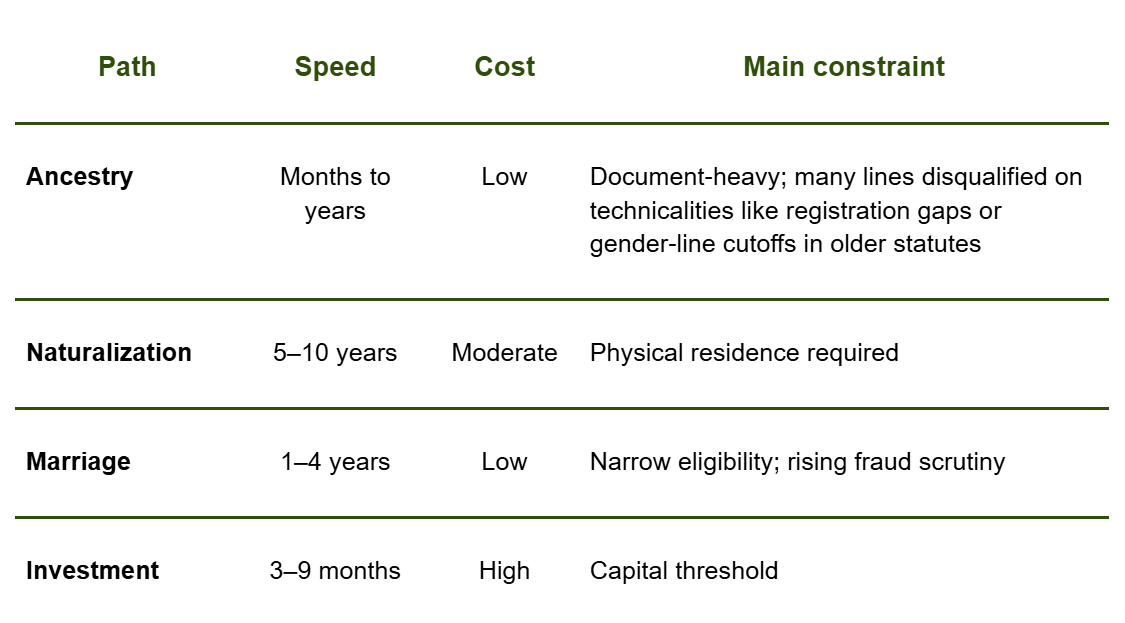
Due diligence has tightened across all reputable programs. The Eastern Caribbean states moved to a unified regulatory authority in 2025 under pressure from the EU's threat to suspend visa-free access. Source-of-funds review is no longer a formality, and applications with weak documentation are rejected outright.
The advisor's role here is structural: keeping the stack coherent against tax, succession, regulatory, and reputational pressure over the long term. The role isn't selling the next passport.
Putting the Stack in Perspective
Multiple citizenship is genuinely useful when built around a clear objective. It becomes brittle when collected by reflex. The number of passports a person holds matters far less than how the combination is engineered to survive tax, succession, banking, and political pressure over decades. We design the stack. The program selection follows. Open the conversation when you're ready for that order of operations.