Best European Countries to Live in 2026


Most "best country" lists rank by quality of life alone. That's a problem. Denmark scores at the top of every well-being index and offers virtually no investment migration pathway for non-EU citizens. Switzerland pays the highest salaries on the continent and ties residency to employer sponsorship, which most applicants won't secure.
The European countries to live in that actually matter in 2026 are the ones where lifestyle quality and legal access overlap. Where your capital buys both a good daily life and a realistic way in.
This article focuses on that overlap for investors, professionals, and families weighing European migration as a financial and legal decision, not a daydream.
A Ranking Built for People Who Need a Visa, Not a Vacation
Standard relocation rankings weight safety scores and GDP per capita, then call it a day. That tells you nothing about how easy it is to actually move there, what the residency costs, or how long you need to spend on the ground each year to keep your permit valid.
The countries below are scored on what shapes your life after arrival and your ability to stay. That means cost of living relative to imported income, healthcare you can access from day one, how widely English is spoken, climate, and how heavy the physical presence obligation actually is. Matching your migration plan to your real-life priorities is the step that prevents expensive mismatches between where you want to live and where you can legally remain.
Portugal — What the 2026 Rule Changes Mean for New Arrivals
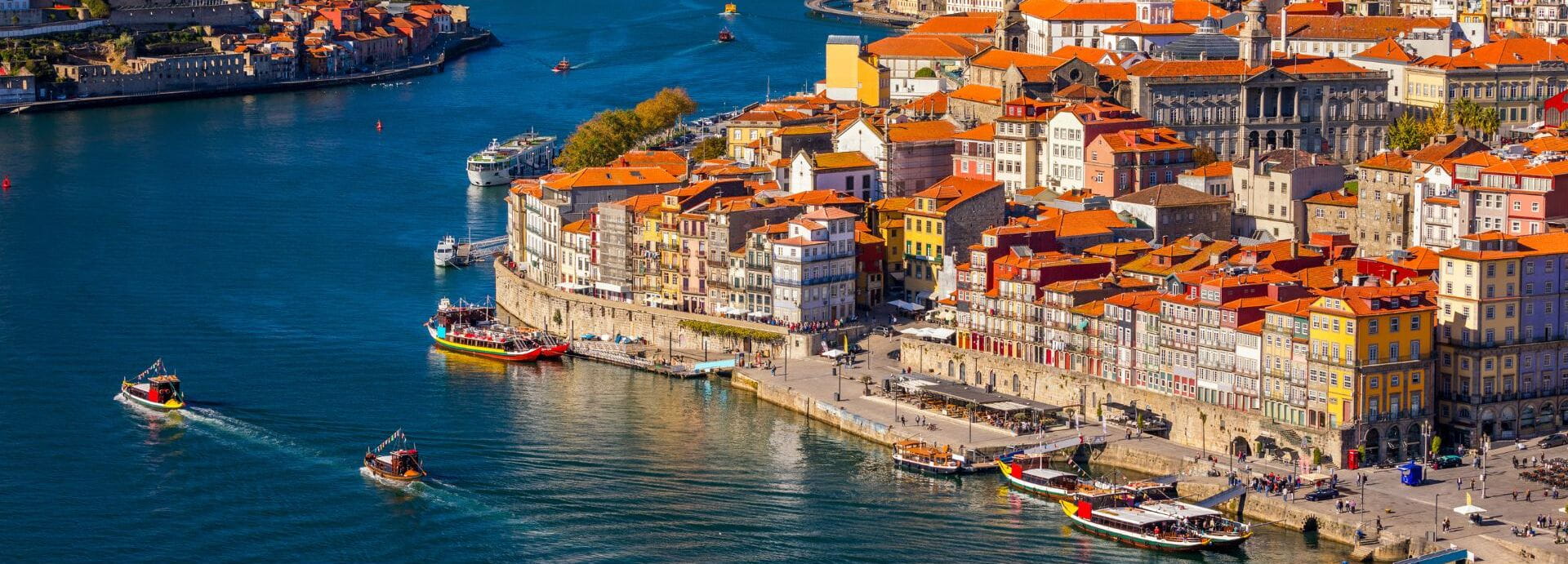
Portugal leads every European relocation list for a reason, but 2026 introduced changes that rewrite the math for new arrivals.
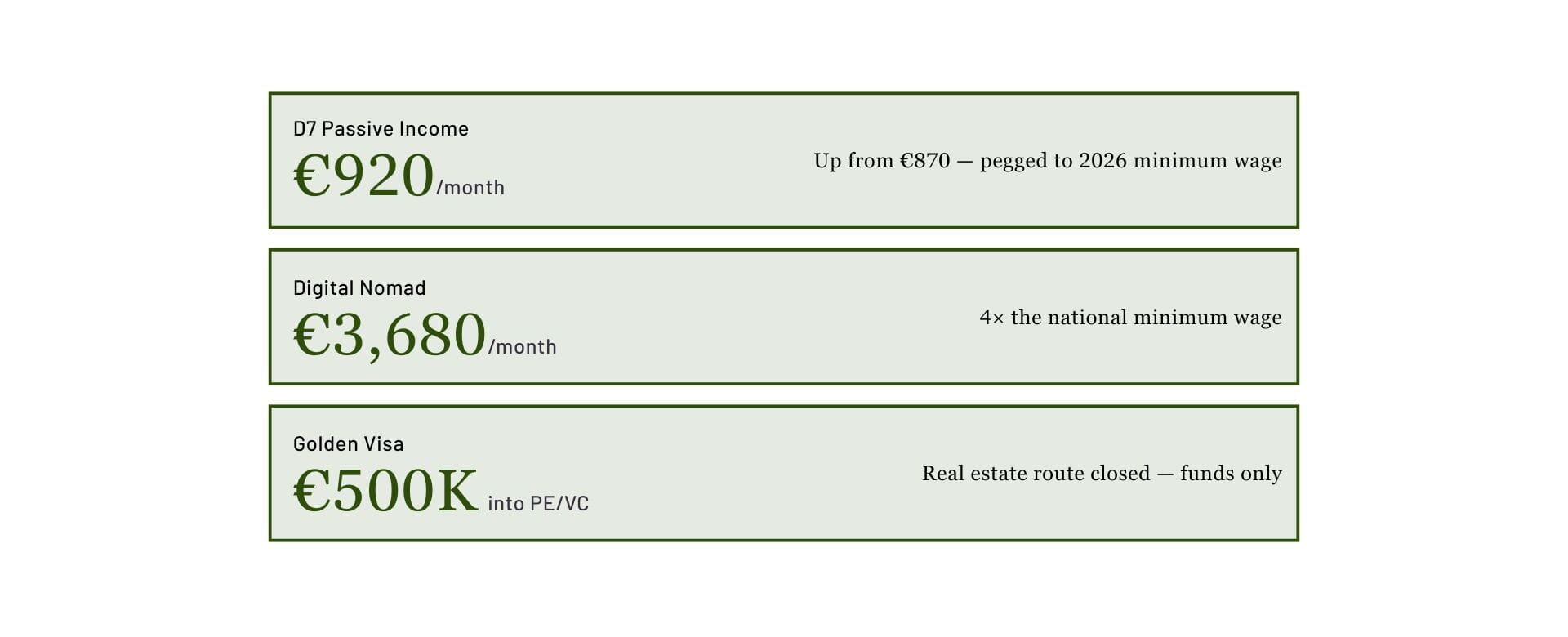
The D7 visa requires €920/month in provable passive income (up from €870 in 2025, tracking Portugal's new minimum wage). The Digital Nomad Visa sits at €3,680/month under the same formula. The Golden Visa now demands €500,000 into private equity or venture capital; real estate no longer qualifies. And the NHR tax regime, once a massive draw for high earners relocating foreign income, closed to new applicants in 2024.
On the ground, the numbers hold up. A couple can live in Lisbon on €2,500–€3,000 per month, and significantly less in the Algarve or smaller cities like Braga. English is widely spoken. The country gets 2,500–3,200 hours of sunshine a year, depending on the region. Expat communities in Lisbon, Porto, and the Algarve are large and well-established. Public healthcare covers residents.
The tradeoff that matters most here is income source. Local salaries are weak. Portugal works best for people who bring income with them: remote workers, retirees, and investors living off portfolio returns. If you're job-hunting locally, the economics look very different.
The Golden Visa's physical presence requirement is roughly 7 days per year, making Portugal a viable base to grow into gradually. On the citizenship front, a new nationality law signed in May 2026 extended the general eligibility period from 5 years to 10 years (7 for EU and CPLP nationals). That's a meaningful change for anyone who previously saw Portugal as a fast track to an EU passport. If that timeline feels long, it's worth seeing where Portugal now sits relative to the rest of Europe. Portugal does permit dual citizenship, which matters if you plan to keep your existing passport.
Greece — Europe's Budget Golden Visa Has a Geographic Fine Print

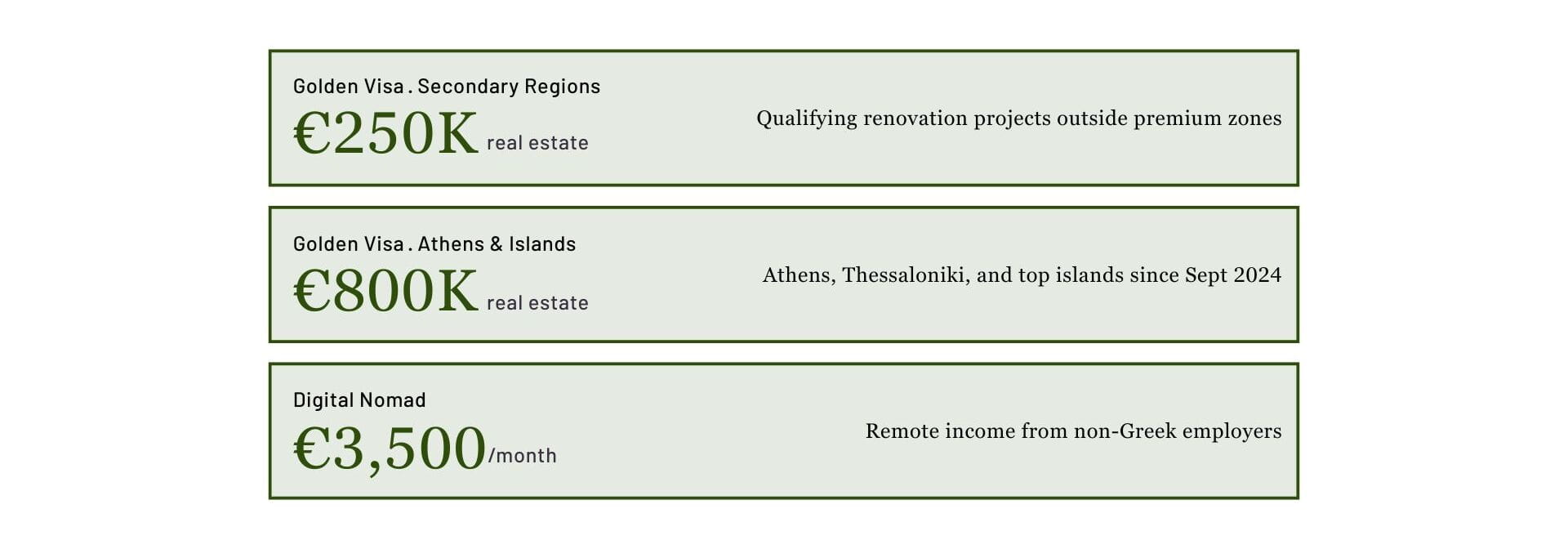
Greece's Golden Visa starts at €250,000 for qualifying renovation projects in secondary regions. Since September 2024, Athens, Thessaloniki, and the popular islands require €800,000. That split determines everything about the financial planning behind a Greek relocation, and most articles bury it.
Living costs sit meaningfully below Western Europe. Two people can cover rent, food, and transport on €1,800–€2,200 per month. The country gets over 300 days of sunshine annually. A growing remote work ecosystem has taken root in Athens and Crete, and the Digital Nomad Visa sets its income bar at €3,500/month. Residents have access to the public healthcare system.
Greek bureaucracy moves more slowly than Portugal's. The economy hasn't fully recovered, and local employment runs thin outside tourism and shipping. The €250,000 price point only works if you're genuinely open to secondary locations. Corfu, the Peloponnese coast, and parts of central Greece sit in that lower tier and offer a genuine quality of life without the premium-zone price tag.
Italy — Where Patience Gets Repaid in Lifestyle and Tax Efficiency
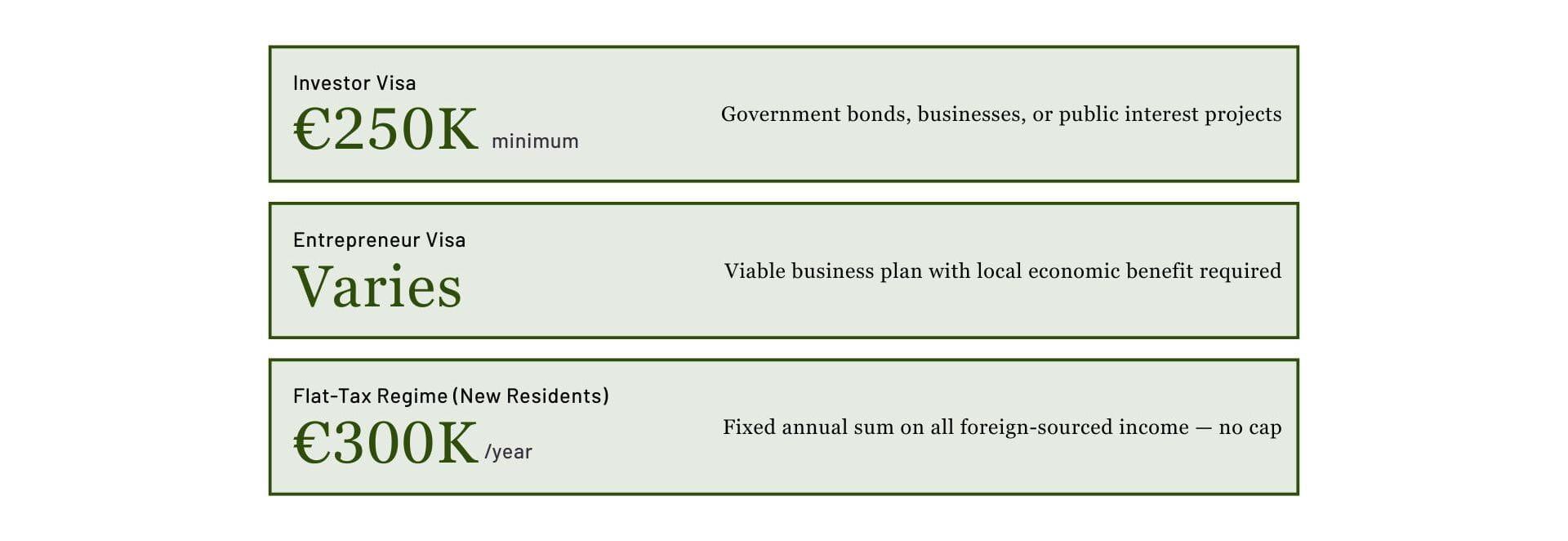
Italy's investor visa starts at €250,000. An entrepreneur visa route exists for business-focused relocators. But the real magnet for high earners is the flat-tax regime for new residents, which lets you pay a fixed €300,000 per year on all foreign-sourced income regardless of how much you earn. That figure rose from €200,000 under the 2026 Budget Law (and was €100,000 for those who opted in before August 2024). The economics only make sense if your foreign income exceeds roughly €750,000 annually, at which point Italy's top marginal rate of 43% would cost more than the lump sum.
Regional costs vary enormously. Milan runs €2,800–€3,000/month for two people. Puglia, Sardinia, and Umbria cost a fraction of that and deliver the lifestyle most people imagine when they think about Italy. Healthcare ranks among the best in the world. International school networks operate in Milan, Rome, Florence, and Bologna.
Visa approvals run 6–12 months, sometimes longer. Italian bureaucracy tests patience in ways that catch even experienced relocators off guard. And Italy expects more sustained physical presence than Portugal or Greece; this isn't a "visit 7 days a year" arrangement.
Citizenship takes 10 years of continuous residency, the longest timeline on this list by a wide margin.
Malta — EU Citizenship in Under Three Years, If You Can Afford It
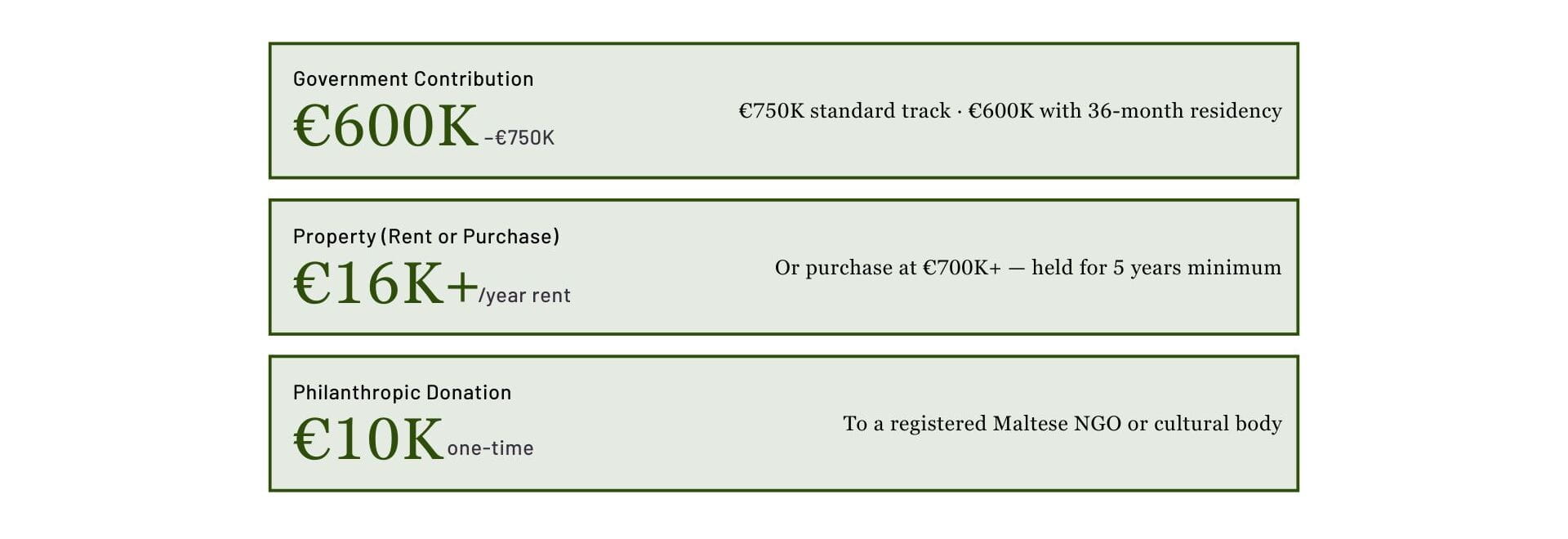
Malta's Exceptional Investor Naturalisation (MEIN) program delivers EU citizenship in 12–36 months. Nothing else in Europe comes close to speed. Entry runs €600,000–€750,000+. The island is English-speaking, an EU member state, and the passport grants visa-free access to roughly 190 countries.
Two people should budget €2,500–€3,200 per month. The island is 316 km². Dining and nightlife punch above their weight. Summer heat is intense, and the sense of scale is something you either enjoy or can't tolerate; there's no middle ground.
Many MEIN applicants treat Maltese citizenship as a mobility tool. EU access, tax planning, and generational flexibility are all maintained from a primary residence elsewhere. That's a common and perfectly legitimate pattern. If you want a full-time European home, the other entries on this list will serve most families better. If you want an EU passport with real speed, Malta is unmatched.
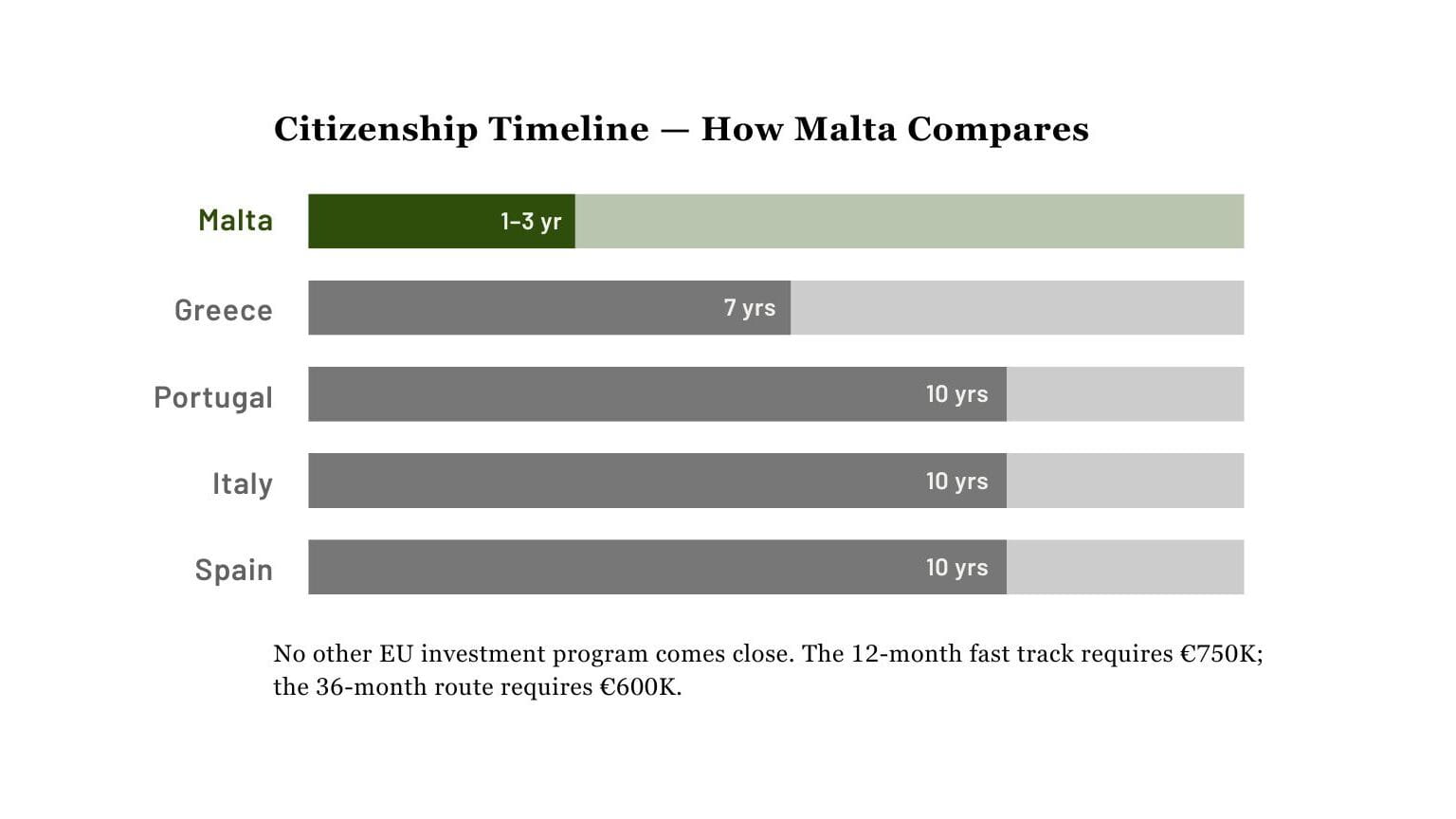
Many Malta applicants already hold one or two passports. The legality of adding another depends on the citizenship rules of the countries you already hold.
Three Countries That Rank High on Lifestyle but Need a Different Way In
Not every strong destination offers an investment-based residency route. These three rank high on daily living quality and deserve coverage, even though the entry path looks different.
➤ Spain attracts remote earners through its Digital Nomad Visa and the Beckham Law, which applies a flat 24% tax rate on qualifying income for six years. The Golden Visa at €500,000 still exists but faces political pressure. Healthcare is public and excellent. Climate, food culture, and social infrastructure are hard to beat anywhere in Europe. Monthly costs for two people run €2,000–€2,800 depending on the city.
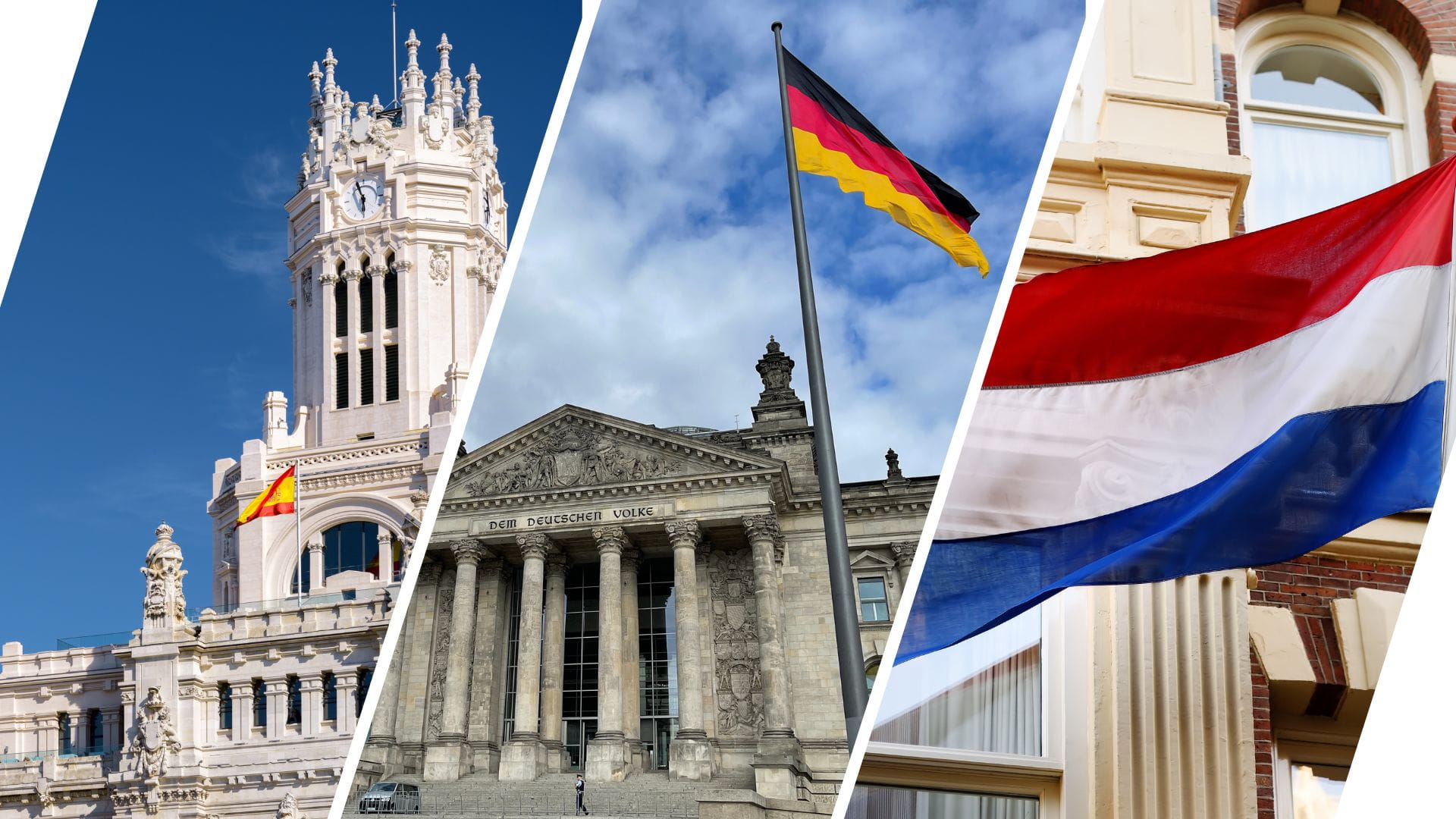
➤ Germany runs on the EU Blue Card, a work permit for skilled professionals with a job offer. No golden visa exists. The 2024 nationality reform cut the standard residency requirement for citizenship from 8 years to 5. It's Europe's largest economy, efficient and well-organized, and expensive in Munich or Frankfurt but significantly cheaper in Leipzig, Dresden, or Stuttgart. Germany suits employed professionals and entrepreneurs, not passive investors.
➤ The Netherlands has the highest English proficiency on the continent. The Highly Skilled Migrant Visa offers a clear route for professionals. Expat infrastructure is strong, especially in Amsterdam, Rotterdam, and The Hague. Housing costs in the Randstad are aggressive enough to cancel out salary advantages for many relocators, so look beyond the big three cities if budget matters.
What Each Country Costs to Enter, to Live In, and to Keep?
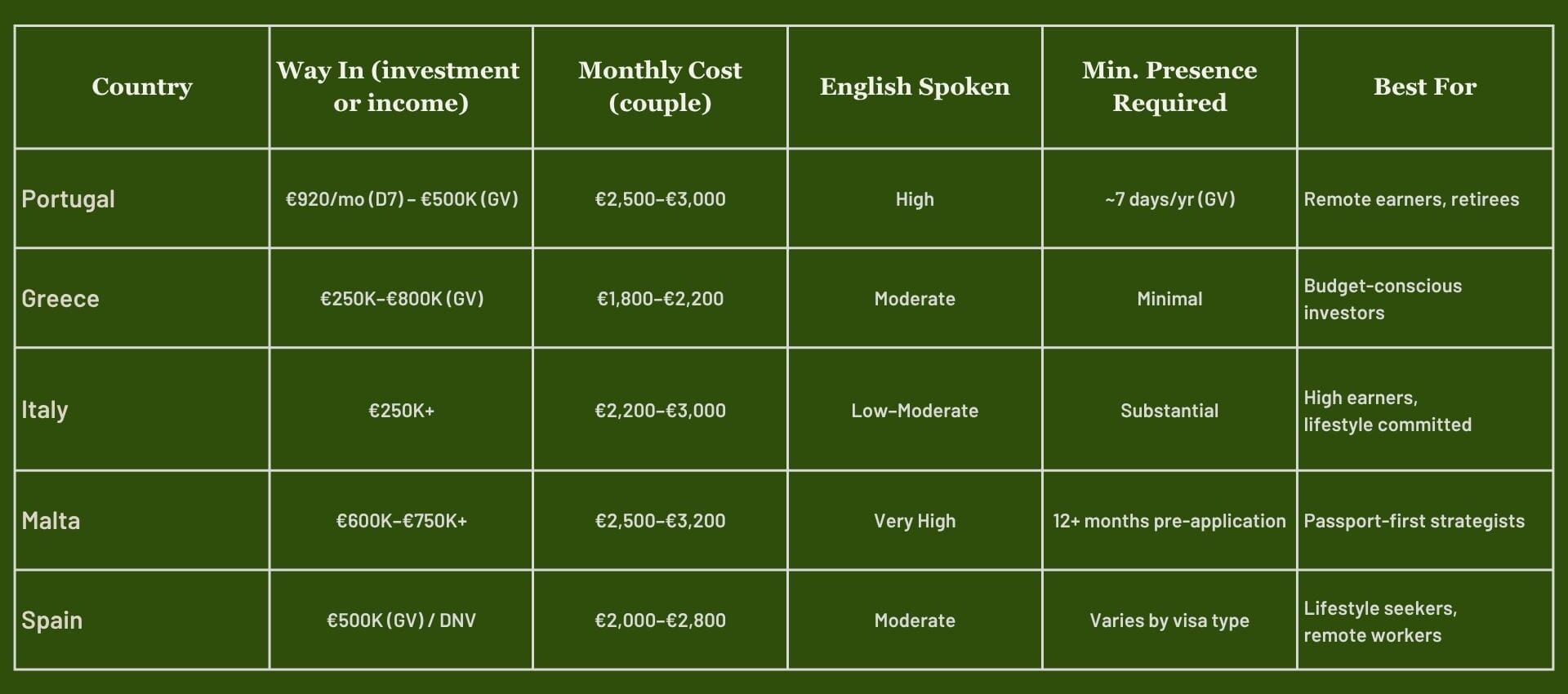
No single winner. The lowest entry cost is in Greece. The best lifestyle-to-access ratio is in Portugal, even with its new 10-year citizenship timeline. The strongest tax play for high earners is Italy, if you clear the €750K income threshold, where the flat sum beats marginal rates. The fastest strategic outcome is Malta. The best all-around daily life without investment is in Spain.
The right answer depends on what kind of life you're building, and where your broader migration plan actually points.