
United States EB-5 Immigrant Investor Program (EB-5 visa)
If USCIS approves and a visa is available, EB-5 leads to a two-year conditional green card for $1,050,000 at risk in a US business creating 10 full-time jobs, or $800,000 in a targeted employment area or infrastructure project, for filings before 1 January 2027. Regional-center visas are authorised to 30 September 2027; filings since 1 October 2026 lack lapse protection.
Law as at 7 October 2026. See our change log. · Last reviewed 7 Oct 2026 · Next review due 1 Nov 2026
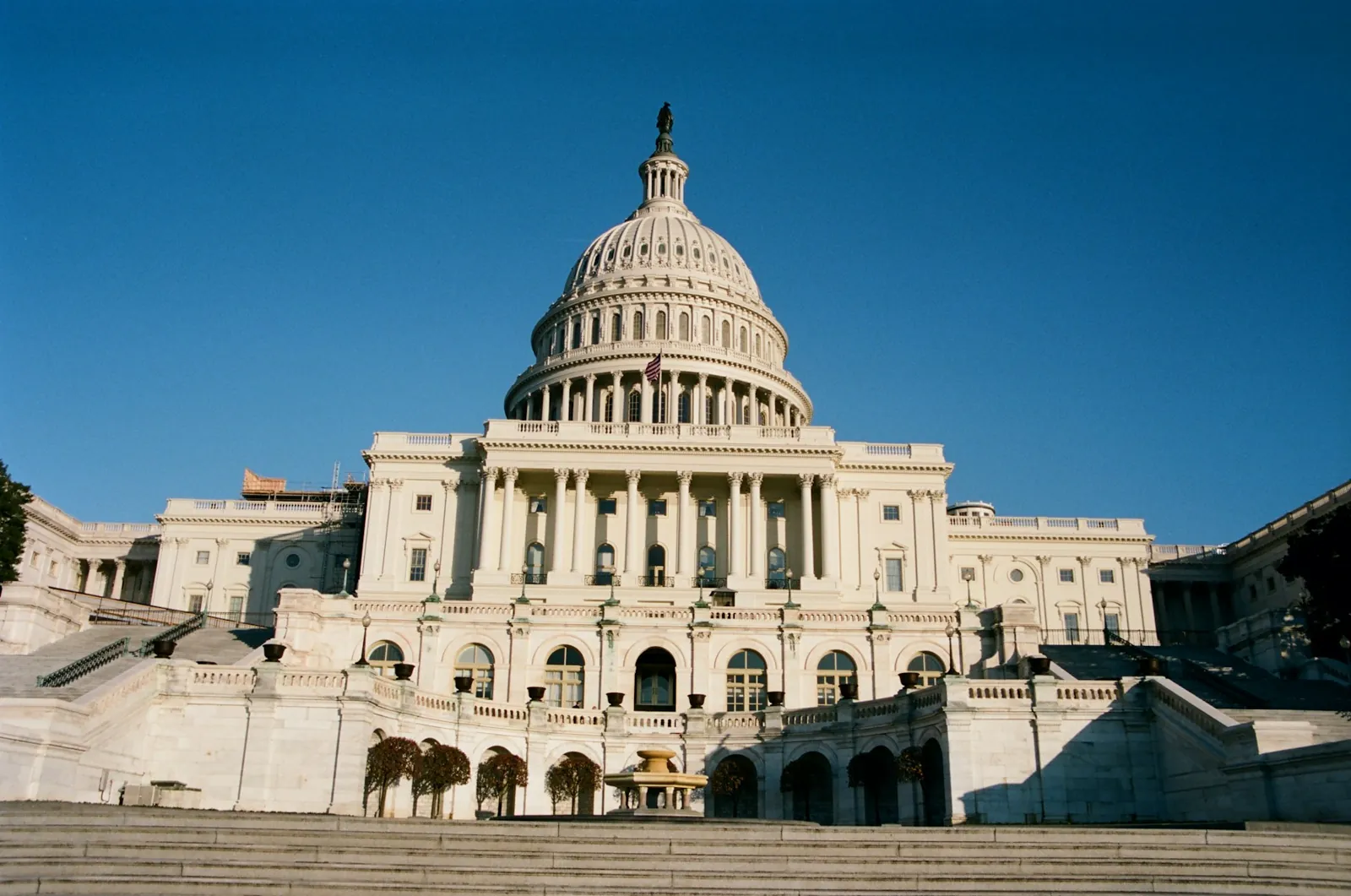
Washington DC
Pending renewal · to 30 Sep 2027Pending renewal: regional-center EB-5 visas are authorised through 30 September 2027, and no renewal has been enacted (as at 8 October 2026).
Open · no end dateOpen: direct EB-5 investment under INA 203(b)(5)(A) has no end date.
US$800k
TEA or infrastructure minimum
US$1.05m
Standard minimum
10 jobs
Per investor
30 Sep 2027
Regional centers authorised to
The EB-5 Reform and Integrity Act of 2022 (RIA), signed on 15 March 2022, sets the current rules in INA 203(b)(5) (USCIS, About EB-5).
| Key fact | As at 7 October 2026 |
|---|---|
| Minimum investment | $1,050,000, or $800,000 in a TEA or infrastructure project, for petitions filed before 1 January 2027 |
| Amounts for petitions filed from 1 January 2027 | DHS to publish; formula INA 203(b)(5)(C)(iii) |
| Regional-center authorisation | 30 September 2027 |
| Grandfathering cutoff | 30 September 2026, passed |
| Regional-center filings since 1 October 2026 | No INA 203(b)(5)(S) lapse protection |
| Set-asides | 20% rural, 10% high unemployment, 2% infrastructure |
| USCIS fees from 30 November 2026 | See the fee table |
| Conditional residence | 2 years, if the petition is approved and a visa is available |
| I-829 window | 90 days before the second anniversary |
| Latest Visa Bulletin | October 2026 |
01
How much does EB-5 cost in 2026, and what changes on 1 January 2027?
The minimum is $1,050,000, or $800,000 in a targeted employment area (TEA) or infrastructure project (INA 203(b)(5)(C)(i) and (ii)). 8 CFR 204.6(f) still prints $1,800,000 and $900,000 from a 2019 rule that a federal court vacated in June 2021, and USCIS does not apply those amounts to any petition. For petitions filed from 15 March 2022 the statutory $1,050,000 and $800,000 apply (INA 203(b)(5)(C); USCIS About EB-5 table; USCIS Policy Manual).
The 2027 adjustment. From 1 January 2027, and every 5 years after, both amounts adjust automatically for petitions filed on or after that date (INA 203(b)(5)(C)(iii)). DHS publishes the figures as a technical amendment in the Federal Register.
Our Federal Register search found no such amendment as at 7 October 2026. See our EB-5 investment amounts from 1 January 2027.
New USCIS fees. A final rule sets new EB-5 fees for filings postmarked on or after 30 November 2026 (91 FR 61940, new 8 CFR 106.2(d)).
| Filing | Fee from 30 November 2026 |
|---|---|
| Form I-526 (direct investor) | $7,615 |
| Form I-526E (regional-center investor), initial filing | $7,850 |
| Form I-526E amendment | $7,775 |
| EB-5 Integrity Fund fee on each regional-center petition (INA 203(b)(5)(J)(ii)(II); 8 CFR 106.2(d)(1)) | $1,100 |
| Form I-829 (removal of conditions) | $5,000 |
What it means for your file. A petition filed before 1 January 2027 keeps today's amounts. In our view, weigh that saving against the regional-center lapse risk set out in the next section.
02
Is the EB-5 regional center program ending?
Not yet. Regional-center visas are available "through September 30, 2027" (INA 203(b)(5)(E)(i)), as the USCIS Policy Manual also records. Direct investment under INA 203(b)(5)(A) has no end date.
INA 203(b)(5)(S) protects some regional-center petitions filed on or before 30 September 2026 if the program lapses. That cutoff has passed, and we have found no enacted extension as at 7 October 2026.
The risk for anyone filing now. An I-526E filed on or after 1 October 2026 has no INA 203(b)(5)(S) protection. On the statute's wording, a regional-center investor's I-829 filed on or after 1 October 2026 is also outside INA 203(b)(5)(S)(i), even where the I-526E was filed earlier. If Congress does not reauthorise the program by 30 September 2027, INA 203(b)(5)(S) does not require DHS to keep processing that petition.
See our EB-5 regional center sunset and grandfathering.
03
What is the difference between a direct EB-5 investment and a regional-center investment?
Direct investors file Form I-526 and the jobs must be created directly by the enterprise; regional-center investors file Form I-526E, may count indirect jobs, and rely on a program authorised only to 30 September 2027.
| Item | Direct investment | Regional-center investment |
|---|---|---|
| Petition | Form I-526 | Form I-526E (USCIS) |
| Jobs | Created directly by the enterprise | Up to 90% may be indirect; 75% for construction lasting under 2 years (INA 203(b)(5)(E)(iv)) |
| Project filing | None before your petition | Regional center files the project before any investor petition (INA 203(b)(5)(F)(i)) |
| End date | None in statute | 30 September 2027 |
Each investment must create at least 10 full-time jobs, not counting you, your spouse or your sons and daughters of any age (INA 203(b)(5)(A)(ii)). Full-time means at least 35 hours a week (USCIS, About EB-5). USCIS rejects a Form I-526 associated with a regional center (USCIS, I-526E).
What it means for your file. In our view, direct investment suits a family that will run a US business with 10 direct hires. Regional-center investment suits a passive investor but carries the 2027 sunset risk.
04
How does the Gold Card differ from EB-5?
The Gold Card is an executive-order route to an EB-1 or EB-2 green card in which an unrestricted gift to the Department of Commerce, $1 million per person or $2 million for a company-sponsored principal, is treated as evidence of eligibility (Executive Order 14351, sec. 2). The money is a gift, not an investment, and a federal lawsuit challenging the program is pending (US Gold Card explainer). Executive Order 14351 sec. 3(f) directs agencies to consider expanding the Gold Card program to EB-5 applicants; as at 7 October 2026, we found nothing published under it.
05
What are set-aside visas, and how do TEAs work?
Of each year's EB-5 visas, 32% are reserved (INA 203(b)(5)(B)(i)):
| Reserved category | Share |
|---|---|
| Investment in a rural area | 20% |
| Investment in a high unemployment area | 10% |
| Investment in an infrastructure project | 2% |
A TEA is a rural area or a high unemployment area, judged at the time of investment (INA 203(b)(5)(D)(viii)).
See our EB-5 set-aside visas and TEAs.
06
How long is the wait if you were born in mainland China or India?
For unreserved investments, the October 2026 Visa Bulletin's final action dates are 1 December 2016 for mainland China-born and 1 December 2023 for India-born investors. The rural, high unemployment and infrastructure categories are current for every country.
The Visa Bulletin for October 2026 shows these EB-5 dates (official PDF). "C" means current.
| EB-5 category | Final action: China (mainland-born) | Final action: India | Dates for filing: China | Dates for filing: India | All other countries |
|---|---|---|---|---|---|
| Unreserved | 1 Dec 2016 | 1 Dec 2023 | 1 Mar 2021 | 1 May 2024 | C |
| Rural, high unemployment, infrastructure | C | C | C | C | C |
Source: Visa Bulletin for October 2026, official PDF, paras 5.A and 5.B.
A current set-aside is not permanent, and dates can move back as demand rises. Our EB-5 Visa Bulletin backlog for China-born investors tracks each bulletin.
07
What will USCIS ask for on source and path of funds?
You must show that the capital, and any money used for fees, came from a lawful source by lawful means (INA 203(b)(5)(L)(i)). The statute requires tax returns for the past 7 years unless DHS sets another period (INA 203(b)(5)(L)(ii)). DHS has not done so by rule, so in our view you should prepare 7 years of returns.
Gifts and loans. Gifted or borrowed money counts only if given in good faith and not to get around the source rules (INA 203(b)(5)(L)(iii)). See our EB-5 source of funds.
08
How does the process run from I-526E to conditional green card to I-829?
You file Form I-526 or I-526E; if it is approved and a visa is available, you and your qualifying derivative family members apply for an immigrant visa or adjust status and receive two-year conditional residence; you then file Form I-829 in the 90 days before the second anniversary to remove the conditions.
| Step | What happens | Source |
|---|---|---|
| 1 | File Form I-526 (direct) or I-526E (regional center) | USCIS process page |
| 2 | After approval, apply for an immigrant visa abroad on Form DS-260, or adjust status in the US on Form I-485 | USCIS process page |
| 3 | You and your derivative family receive conditional permanent residence for 2 years | USCIS process page |
| 4 | File Form I-829 in the 90 days before the second anniversary | INA 216A(d)(2)(A)8 CFR 216.6(a)(1) |
See our I-526E to I-829 process.
09
Can I file for a green card (I-485) at the same time as my I-526E?
Yes, if a visa would be immediately available on approval. INA 245(n) treats the I-485 as properly filed whether submitted with the investor petition or later (INA 245(n)). You must also have been inspected and admitted or paroled (INA 245(a)).
For October 2026, USCIS uses the Dates for Filing chart for all employment-based categories (USCIS filing charts). See our EB-5 concurrent filing (I-485).
10
What protections does the 2022 Act give investors, and what should I check?
The RIA added investor controls on fund administration, annual statements and audits, promoters and fee disclosure, sanctions screening, and regional-center termination or debarment (INA 203(b)(5)); our I-526E to I-829 process guide sets them out.
What to ask for before you subscribe. In our view, ask for the Form I-956F receipt or approval, the fund administrator's licence or waiver basis and the latest annual statement. Add your signed fee disclosure and the TEA or infrastructure evidence, and check every redemption term against the capital rules: no guaranteed rate of return and no contractual right to repayment (INA 203(b)(5)(D)(ii)(III)(cc) and (dd)).
11
What does a green card mean for my tax residence and reporting?
Tax residence. A green-card holder is a US resident for income tax (26 USC 7701(b)(1)(A)(i)). Residents are taxed on worldwide income at citizens' rates (IRS, resident aliens).
FBAR and Form 8938. A US resident must file an FBAR if foreign accounts exceed $10,000 in total at any time in the year (IRS FBAR page). Form 8938 separately covers specified foreign financial assets above a threshold (IRS Form 8938 Q&A).
Estate tax. US estate tax applies to the estate of a citizen or resident (26 USC 2001(a)). A "resident" decedent is one domiciled in the US at death. Domicile can arise from living there briefly with no definite intention to leave (26 CFR 20.0-1(b)(1)).
Before you land. In our view, review trusts, holding companies, gifts and unrealised gains before your first day as a permanent resident.
Leaving later. A permanent resident in at least 8 of the last 15 tax years is a long-term resident (26 USC 877(e)(2)). A long-term resident who gives up the green card is an expatriate (26 USC 877A(g)(2)). If covered, they are treated as selling all property the day before expatriation (877A(a)(1)).
12
Does a green card make me a US citizen, and can I keep my current passport?
No. A green card is permanent residence, not citizenship. You can apply to naturalise after 5 years' continuous residence as a permanent resident, with physical presence for at least half that time (INA 316(a)). Time as a conditional resident counts (INA 216A(e)).
Your home country's law decides what happens when you naturalise:
| Home country | Effect of voluntarily acquiring another citizenship | Source |
|---|---|---|
| Mainland China | Automatic loss for a national settled abroad | Nationality Law art. 9 |
| India | Citizenship ceases on acquisition | Citizenship Act 1955 s. 9(1) |
| Indonesia | Citizenship lost | Law 12/2006 art. 23(a) |
| Malaysia | Government may deprive by order | Federal Constitution art. 24(1) |
| Singapore | Government may deprive by order | Constitution art. 134(1)(a) |
In our view, these acquisition rules bite at US naturalisation rather than at the green card. Indonesia is the exception to watch: a citizen living abroad for 5 continuous years who does not register a wish to remain Indonesian with the embassy after written notice can lose citizenship (Law 12/2006 art. 23(i)).
13
FAQ
Is my EB-5 capital protected if the project fails?
Can I still invest $800,000 if I file in 2027?
Do my spouse and children get green cards too?
I filed a regional-center petition on or before 30 September 2026. What happens if the program lapses?
The law protects it against the lapse itself. INA 203(b)(5)(S) says that if the program's authority expires, DHS must keep processing regional-center investor petitions (Form I-526E, or an older regional-center Form I-526) and Form I-829 petitions based on a regional-center investment that were filed on or before 30 September 2026. DHS may not deny them because of the lapse, or suspend or terminate the allocation of visas for approved petitions. Other grounds for denial still apply. The test is each petition's own filing date, so an I-829 filed on or after 1 October 2026 is outside this protection, even if the I-526E was filed earlier. Section 203(b)(5)(S) does not name spouses and children. Under INA 203(d), a spouse or child accompanying or following to join is entitled to the same status and order of consideration as the investor.
Can I still file a regional-center petition now?
Yes. Regional-center visas are authorised through 30 September 2027 (INA 203(b)(5)(E)(i)), so a regional-center petition can still be filed. A petition filed on or after 1 October 2026 has no protection under INA 203(b)(5)(S). If Congress does not renew the program by 30 September 2027, the law will not require DHS to keep processing it.
What would a lapse do, and what would it not do?
Regional-center visas are authorised only through 30 September 2027, so continuing them after that date needs a new Act of Congress (INA 203(b)(5)(E)(i)). For petitions filed on or before 30 September 2026, DHS must keep processing, may not deny because of the lapse, and may not suspend or terminate visas for approved petitions (INA 203(b)(5)(S)). For regional-center petitions filed later, the statute sets no such duty. A lapse would not touch direct EB-5, which has no end date (INA 203(b)(5)(A)), and it would not remove other grounds for denial. No renewal has been enacted (as at 8 October 2026).
History, not a promise: when the earlier program's authority ended on 30 June 2021, USCIS suspended adjudication of pending regional-center investor petitions and most regional-center applications from 1 July 2021 (USCIS Policy Manual, vol. 6, part G, ch. 1). Congress reauthorised the program in the EB-5 Reform and Integrity Act, signed on 15 March 2022 (Pub. L. 117-103, Div. BB). The lapse protection in INA 203(b)(5)(S) did not exist then.
Does any of this affect direct EB-5?
No. Direct investment under INA 203(b)(5)(A) has no end date. The 30 September 2027 date and the lapse protection apply only to regional-center investment. A direct investor files Form I-526, and USCIS rejects a Form I-526 that shows a regional-center investment.
EB-5 guides
General information on US immigration and tax law as at 7 October 2026, not advice on your circumstances.
14
Primary sources
- 18 U.S.C. §1153 (INA 203), U.S. Code 2024 ed., govinfo↗
- 28 U.S.C. §1186b (INA 216A), U.S. Code 2024 ed., govinfo↗
- 38 U.S.C. §1255 (INA 245), U.S. Code 2024 ed., govinfo↗
- 48 U.S.C. §1427 (INA 316), U.S. Code 2024 ed., govinfo↗
- 58 CFR 204.6, eCFR↗
- 68 CFR 216.6, eCFR↗
- 7USCIS, EB-5 fee rule, 91 FR 61940 (30 September 2026)↗
- 8Executive Order 14351, The Gold Card, 90 FR 46031 (24 September 2025)↗
- 9USCIS, About the EB-5 Visa Classification↗
- 10USCIS, EB-5 Immigrant Investor Process↗
- 11USCIS, Form I-526E↗
- 12USCIS, Form I-829↗
- 13USCIS Policy Manual, Vol. 6, Part G, Chapter 1↗
- 14USCIS, Adjustment of status filing charts from the Visa Bulletin↗
- 15US Department of State, Visa Bulletin for October 2026↗
- 16US Department of State, Visa Bulletin for October 2026 (official PDF)↗
- 1726 U.S.C. §7701, U.S. Code 2024 ed., govinfo↗
- 18IRS, Taxation of resident aliens↗
- 19IRS, Report of Foreign Bank and Financial Accounts (FBAR)↗
- 20IRS, Basic questions and answers on Form 8938↗
- 2126 U.S.C. §2001, U.S. Code 2024 ed., govinfo↗
- 2226 CFR 20.0-1, eCFR↗
- 2326 U.S.C. §877, U.S. Code 2024 ed., govinfo↗
- 2426 U.S.C. §877A, U.S. Code 2024 ed., govinfo↗
- 25Nationality Law of the People's Republic of China↗
- 26Citizenship Act 1955 (India), MHA consolidated text↗
- 27Undang-Undang Nomor 12 Tahun 2006 (Indonesia)↗
- 28Perlembagaan Persekutuan (Malaysia), 2020 reprint↗
- 29Constitution of the Republic of Singapore, art. 134↗
- 30Pub. L. 117-103, Div. BB (EB-5 Reform and Integrity Act of 2022), §§103, 108, govinfo↗
Choose and time your EB-5 investment.
We'll compare direct and regional-center investment for your case and work out when you should file.