
Hong Kong New CIES: What Does Residence Require in 2026?
Hong Kong's New Capital Investment Entrant Scheme gives renewable residence to investors who have held HK$30 million in net assets for six months and then invest HK$30 million in Hong Kong. Of that, HK$27 million goes into permissible assets and HK$3 million into the CIES Investment Portfolio. Permanent residence needs seven years of continuous ordinary residence.
Law as at 12 October 2026 · Next review 12 December 2026
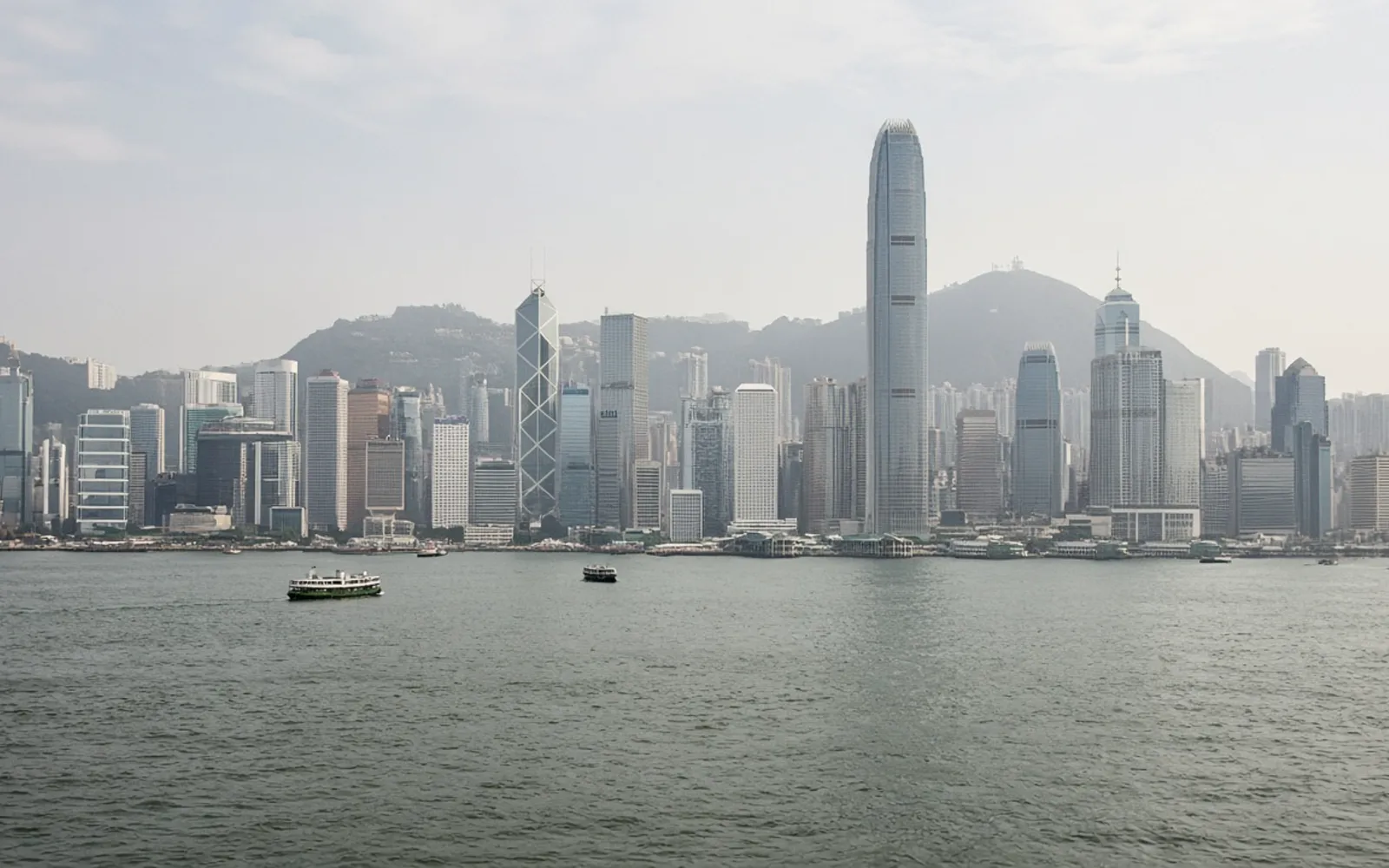
Hong Kong
OpenOpen to new applicants under the amended Scheme Rules.
| Key fact | Rule |
|---|---|
| Net assets | HK$30 million, held for the six months before applying |
| Investment | HK$27 million permissible assets plus HK$3 million CIES Portfolio |
| Real estate | Counts up to HK$15 million, homes up to HK$10 million |
| Stay | Up to 24 months, then extensions of up to 3 years |
| Permanent residence | 7 years' continuous ordinary residence |
Law as at 12 October 2026.
01
Who runs the scheme?
Invest Hong Kong's New CIES Office checks your net assets and your investment, then checks each year that you have kept it. The Immigration Department (ImmD) decides the visa and any extensions (InvestHK overview). The scheme opened on 1 March 2024. Its rules sit in the Scheme Rules, last amended on 1 March 2026.
02
Who can apply?
You must be 18 or over, have no adverse immigration record, and be able to support yourself and your family without relying on the investment's returns or on work or public assistance in Hong Kong (eligibility; Scheme Rules, para. 2.1). You must also be one of these:
- a foreign national, except nationals of Afghanistan, Cuba and North Korea;
- a Chinese national with permanent residence in a foreign country;
- a Macao SAR resident; or
- a Chinese resident of Taiwan.
Stateless people with permanent residence abroad and proven re-entry rights can also apply. For mainland Chinese families, the second limb is the one that matters: a mainland passport alone does not qualify.
03
What net assets do you need?
InvestHK must first certify that you had net assets or net equity of at least HK$30 million, or the foreign-currency equivalent, throughout the six months before your net-asset application (net-asset assessment). Only assets you are absolutely beneficially entitled to count. Your share of assets held jointly with family members counts, but assets held with business partners do not (Scheme Rules, para. 1.16). You hire a Hong Kong practising CPA, at your own cost, to prepare the evidence.
04
How the investment works
You invest at least HK$30 million net in permissible investment assets, at any time from 180 days before your net-asset application until 180 days after ImmD's approval in principle (Scheme Rules, para. 2.1(d)). Assets bought before 1 March 2024 do not count (investment requirement).
The HK$3 million slice. Every applicant puts HK$3 million into the CIES Investment Portfolio, set up and overseen by the Hong Kong Investment Corporation Limited. It is locked up for a period, and timing of any later withdrawal depends on the portfolio's own terms and market liquidity. Capital and dividends are not guaranteed (para. 5.3.1).
The HK$27 million slice. This goes into permissible financial assets, Hong Kong real estate, or both:
- shares listed on the Stock Exchange of Hong Kong and traded in Hong Kong dollars or renminbi;
- Hong Kong dollar or renminbi debt securities that are listed there, or issued or guaranteed by the Government, its bodies or listed companies;
- certificates of deposit from authorized institutions, capped at HK$3 million;
- subordinated debt from authorized institutions;
- SFC-authorized funds, REITs and investment-linked assurance schemes, plus open-ended fund companies and limited partnership funds. Private open-ended fund companies and private limited partnership funds are capped at HK$10 million together.
Real estate. Property counts up to HK$15 million in total, of which homes count up to HK$10 million. A home must be a single Hong Kong property with a price of HK$30 million or more. These limits apply to purchases completed on or after 17 September 2025 (Scheme Rules, Note 8). Earlier purchases stay under the old limits: a HK$50 million floor for a single home and a HK$10 million cap on all property.
Holding company. You may hold the investment through a wholly owned Hong Kong private company that is a family-owned investment holding vehicle, or a special purpose entity under one. The vehicle needs two full-time employees in Hong Kong, at least HK$2 million of annual operating spending there, and management by your family's eligible single family office with at least HK$240 million of family assets (new measures; Scheme Rules, para. 1.12). The route started on 1 March 2025, and its conditions were updated on 1 March 2026 (Notes 7 and 9).
If values fall or rise. You need not top up if the portfolio falls below HK$30 million, even after a total loss (para. 7.1). You also cannot take out gains above that level, apart from dividends, interest, rent and a few other items. The investment stays ring-fenced and must be reinvested within the rules (para. 7.2). Switches between assets have tight deadlines, such as 14 days between financial assets (para. 8.2).
In our view, the HK$15 million property cap means at least HK$12 million of the HK$27 million will sit in securities and funds for every family.
05
How does the visa work?
After InvestHK certifies your net assets, ImmD may grant approval in principle and let you visit for up to 180 days to make the investment. Once InvestHK certifies the investment, ImmD gives formal approval. Your first stay is normally up to 24 months, on time limitation only (ImmD).
Extensions are normally up to three years each, if you keep the portfolio and meet normal immigration rules. Apply within three months before your stay expires, and at least six weeks before. You may work, hold office, be self-employed or start a business (ImmD FAQ).
ImmD's application fee for specified schemes, which include the New CIES, is HK$600 per person. A visa costs HK$1,300 if the stay is over 180 days, or HK$600 if not (fee tables).
06
Which family members can come?
Your spouse, or partner in a civil partnership, civil union or same-sex marriage legally recognized where it took place, and your unmarried dependent children under 18 may join you as dependants if you can house and support them (ImmD). Their stay is normally linked to yours.
07
How do you reach permanent residence?
After at least seven years of continuous ordinary residence, you and your dependants may apply for permanent residence under the Immigration Ordinance (Scheme Rules, para. 9.3). Keeping the investment for seven years does not by itself prove ordinary residence (ImmD FAQ).
ImmD treats you as ordinarily resident if you live in Hong Kong lawfully, voluntarily and for a settled purpose. Absences do not end that automatically. ImmD weighs their reason, length and frequency, and where your home, work, spouse and young children are (ImmD).
If long absences break your residence but you kept the portfolio for seven years, you may apply for unconditional stay instead. You can then sell the scheme assets (para. 9.4).
An HKSAR passport goes only to Chinese nationals who are permanent residents with a valid permanent identity card (para. 9.3). The rules give foreign nationals no route to a Hong Kong passport.
08
What should families from Asia and the Gulf check?
Mainland families. You need foreign permanent residence first. In our view, settle that, and how the funds will leave the mainland, before the six-month net-asset clock starts.
Tax. Hong Kong charges profits tax only on profits arising in or derived from Hong Kong, and makes no distinction between residents and non-residents (IRD). Moving there may still change your tax residence at home, so take advice in your home country before you go.
Singapore and the Gulf. Families already resident in Singapore or the UAE should compare this with Singapore's Global Investor Programme, which grants permanent residence at the start but asks for a business, fund or family-office investment and a substantial business track record.
In our view, the New CIES suits families who want a Hong Kong base and a liquid portfolio, and expect to live there for seven years.
09
FAQ
Do I have to top up if my investments fall?
Can I buy a home under the New CIES?
Can mainland Chinese citizens apply?
General information on Hong Kong immigration rules as at 12 October 2026, not advice on your circumstances.
Learn about the process, the policies and your eligibility.
Ask Harper Greene
Answers come from our program pages. You can ask to speak with a member of our team.
General information, not legal advice.